Here is a clear, structured comparison of Schedule VII – Union, State & Concurrent Lists of the Indian Constitution:
Overview of Schedule VII
Schedule VII of the Constitution divides powers between:
- Union Government
- State Governments
- Both (Concurrent Authority)
Three Lists & Their Subjects
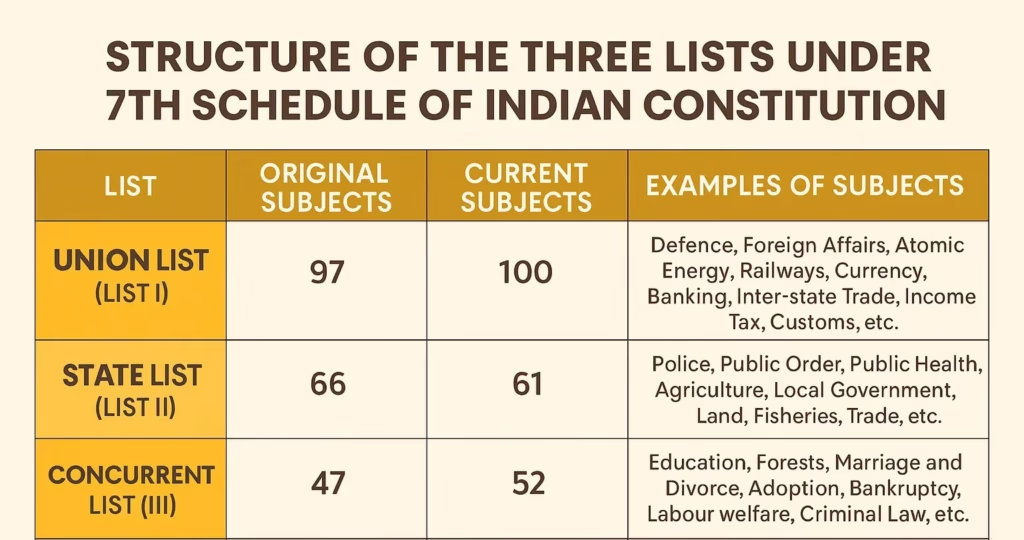
| Feature | Union List | State List | Concurrent List |
|---|
| Number of Subjects (approx.) | 97 | 66 | 47 |
| Type of Subjects | National importance | Local/State importance | Shared subjects |
| Examples | Defence, Railways, Banking, Foreign Affairs | Police, Public Health, Agriculture, Local Govt | Education, Forests, Trade Unions |
| Law-making Power | Only Parliament | Only State Legislature | Both Parliament & States |
| If conflict between laws? | Not applicable | Union law prevails in conflict | Union law prevails |
| Article Reference | Article 246 (Union powers) | Article 246 (State powers) | Article 246 (Concurrent powers) |
Detail-wise Comparison
Union List (List I)
- Deals with matters of national / international significance
- Includes financial, defence & foreign affairs subjects
Examples: - Defence
- Foreign Affairs
- Atomic Energy
- Banking
- Inter-State trade
2️⃣ State List (List II)
- Matters of local or regional importance
- States have complete legislative power
Examples: - Police
- Public Order
- Agriculture
- Land Revenue
- Markets & fairs
3️⃣ Concurrent List (List III)
- Matters on which both Centre & States legislate
- Parliament law dominates in conflict cases
Examples: - Forests
- Marriage & Divorce
- Education
- Electricity
- Adoption
Important Facts
- 42nd Amendment Act (1976) shifted subjects like Education, Forests, Weights & Measures from State List to Concurrent List.
- In national emergency, Parliament can make laws on State List subjects.
- Residual powers belong to Union Government (Article 248).
Why Three Lists Are Needed?
To maintain:
- Federal structure
- Distribution of administrative responsibility
- Unity + Local autonomy
