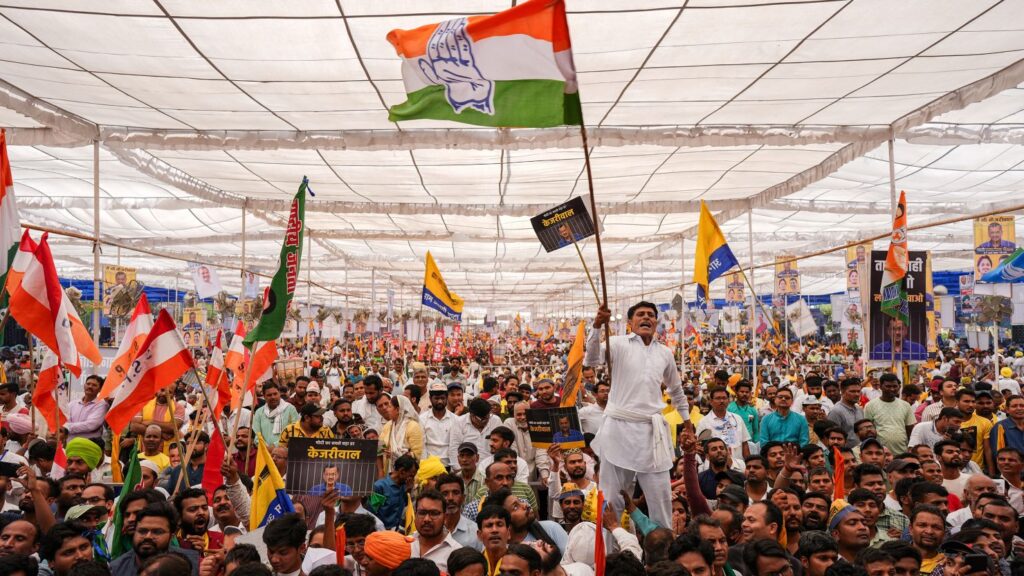
New Delhi: India’s political landscape is witnessing a decisive churn at the state level, where shifting alliances, leadership realignments, and regional assertions are redefining the balance of power. While the ruling Bharatiya Janata Party (BJP) continues to anchor its strategy in organizational depth and governance narratives, opposition parties and regional formations are recalibrating their moves to protect turf and expand influence.
BJP’s State-Centric Strategy
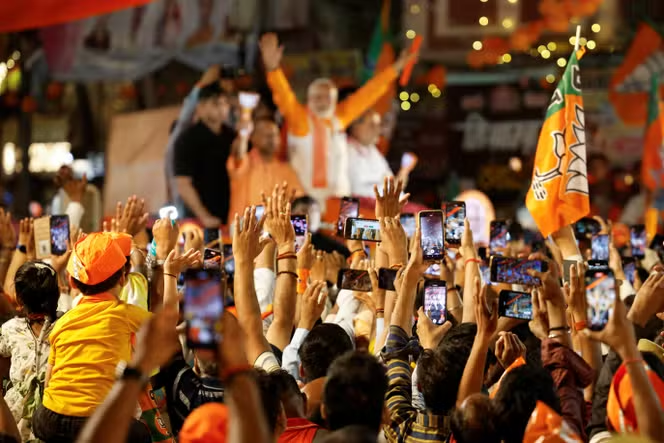
The BJP has doubled down on state-specific leadership and localized messaging, moving beyond one-size-fits-all campaigning. In several states, the party is foregrounding welfare delivery, infrastructure growth, and law-and-order credentials—often pairing these with strong chief ministerial faces or projecting stability through continuity. The approach has helped the BJP consolidate vote banks in some regions while remaining competitive in others where incumbency pressures persist.
Opposition’s Search for Cohesion
Opposition parties face a twin challenge: countering the BJP’s electoral machine and managing internal fragmentation. The Indian National Congress is attempting revival through leadership resets and issue-based mobilization, particularly around jobs, social justice, and federalism. Meanwhile, newer players like the Aam Aadmi Party (AAP) are exporting governance-led narratives beyond their core bases, pitching education and health reforms to urban and semi-urban voters.
Yet, the absence of a durable, pan-India opposition framework means state contests often hinge on local arithmetic rather than national cohesion.
Regional Parties Assert Themselves
Regional forces remain pivotal kingmakers and gatekeepers of state politics. In the east, the All India Trinamool Congress (TMC) continues to leverage regional identity and welfare delivery. In Maharashtra, flux within the Shiv Sena has underscored how leadership splits can reorder alliances overnight. In Bihar, the Janata Dal (United) (JD(U)) exemplifies the strategic flexibility regional parties deploy to retain relevance amid shifting coalitions.
These parties often set the agenda on language, culture, and federal rights—issues that resonate strongly with state electorates and complicate national narratives.
Federalism, Governance, and the Voter
At the heart of these shifts lies a renewed debate on cooperative federalism. States are increasingly asserting autonomy on fiscal devolution, welfare design, and administrative control. For voters, performance at the state level—delivery of services, employment outcomes, and local leadership credibility—has become as decisive as national ideology.
What Lies Ahead
As election cycles approach, expect sharper micro-campaigns, tactical alliances, and leadership projections tailored to regional sensibilities. The BJP’s dominance will be tested by how effectively opposition and regional parties convert local issues into cohesive electoral strategies. One thing is clear: India’s political future will be shaped not just in New Delhi, but in the complex, competitive arenas of its states.
